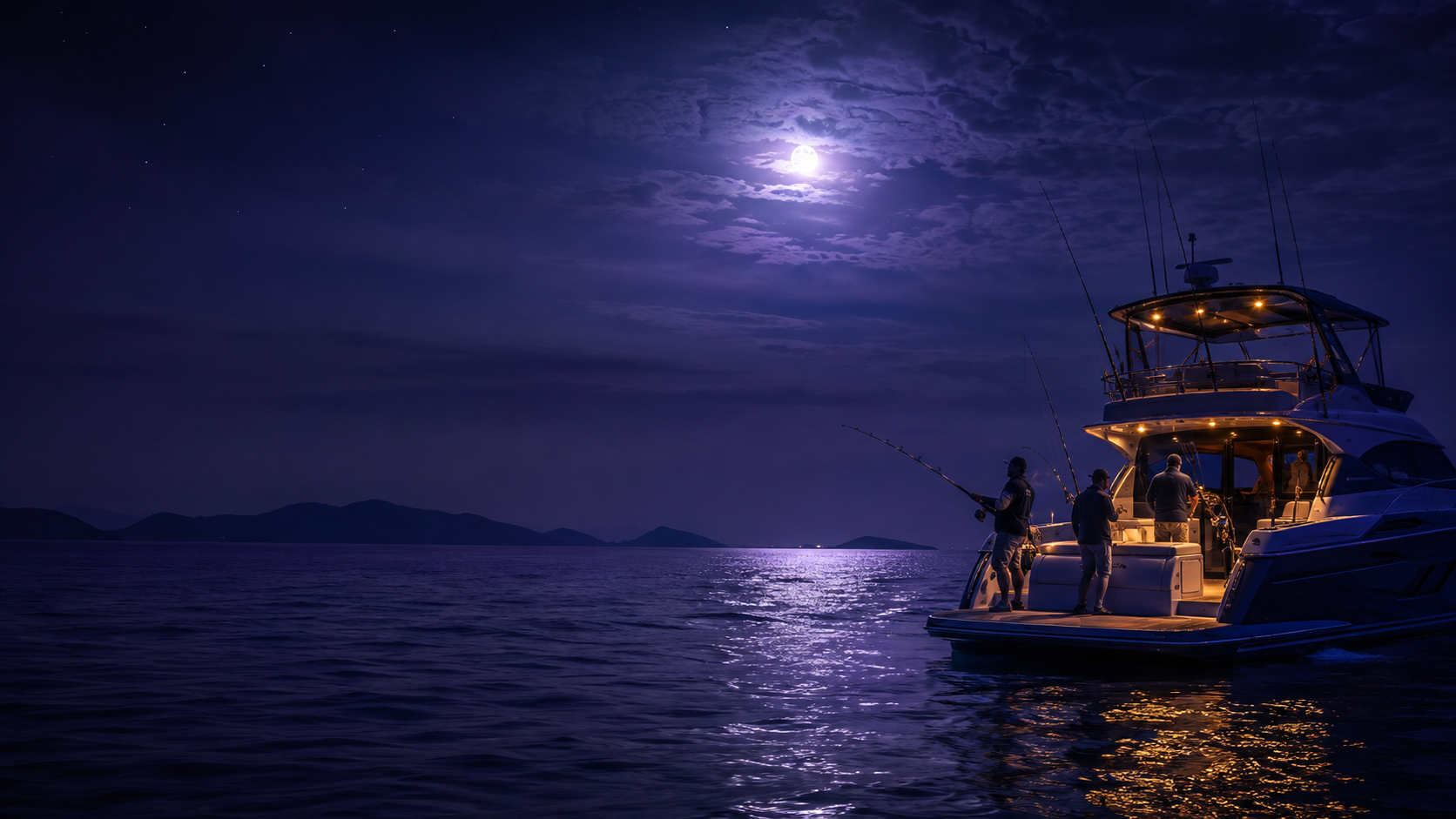
Night fishing,
under the stars
When the sun goes down over the Wetar Strait, the predators come out to hunt. It’s more than fishing — it’s a night on the water you won’t forget.
After dark,
a different sea
Night Fishing trips leave in the late afternoon or evening and return at dawn. Once the sun is down the predators are at their most active — the golden window for catches that are hard to find by day.
Boats carry underwater LED lights and a fish finder, with a captain who understands how fish behave in the dark.
For boat partners — few operators run night trips, so boats equipped for them (underwater LEDs, fish finder) can stand out and charge accordingly.
Predators come alive
Grouper, snapper, hairtail and giant trevally feed hardest after dark — your best shot at a quality catch.
Premium target species
Night fish run bigger and include prized species — a real reward for anglers chasing a trophy.
Underwater LED lights
Lights draw plankton to the boat, which brings in baitfish — and the bigger fish hunting them, right under you.
An unforgettable night
Fishing under the stars, waiting for the next bite far from shore — a feeling you won’t forget.
Safety comes first
Life jackets, a first-aid kit, navigation lights and a marine radio are required on every night-fishing boat.
Night-specialist captains
Captains who fish at night know exactly when and where the fish switch on after dark.
From sunset to sunrise —
how the night unfolds
Every night trip has its own rhythm. Here’s what to expect.
Briefing & setup
Meet at the jetty for a short safety briefing and gear check, then head out to the marks your captain has chosen for the night.
Lights on, plankton rising
The underwater LEDs go on. Within 20–30 minutes plankton gathers around the boat — baitfish follow, and the predators aren’t far behind.
Peak predator activity
Around 9 pm is prime time. Grouper, hairtail and trevally start hunting around the lights, and many anglers land their best fish in this window.
The quiet hours
Between 2 and 4 am the bites slow down but the fish get bigger. Patience in these hours is often rewarded.
Sunrise and the run home
As the sky turns orange the boat heads back. Catches are counted, photos taken, and everyone comes home with a night to remember.
Fish the night under the stars
Night marks with an experienced captain — something every angler should try at least once.